

Sustainable development has become a priority for governments, businesses, and communities seeking to balance economic growth with environmental responsibility and social well-being. As populations grow and infrastructure expands, organizations face increasing pressure to use resources efficiently, protect natural environments, and make informed decisions that support long-term development.
Achieving these goals requires more than policies and planning. It depends on access to accurate information about land, infrastructure, environmental conditions, and the people and assets affected by development projects.
This is where geospatial solutions play a vital role. By combining location-based data with advanced mapping and analysis tools, geospatial technologies help organizations understand their environments, plan more effectively, and make decisions that support sustainable growth.
Understanding Geospatial Solutions
Geospatial solutions use geographic information to capture, analyze, visualize, and manage data linked to specific locations.
They enable organizations to understand how different elements of the environment interact, whether it is transportation networks, land use, utility infrastructure, water resources, or environmental conditions.
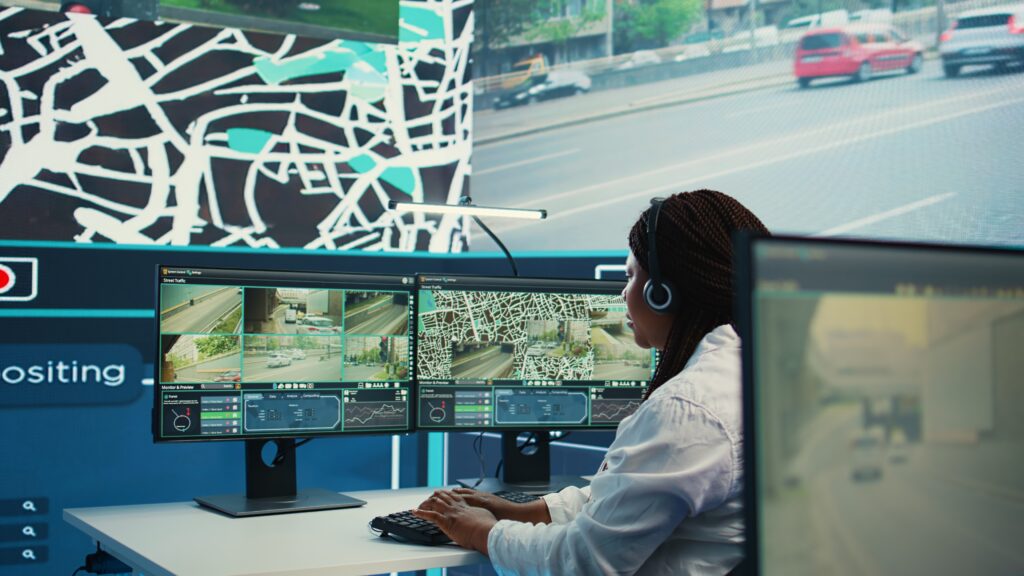
Instead of relying solely on reports or spreadsheets, decision-makers can view information on interactive maps that provide a clearer understanding of existing conditions and future development opportunities.
This location-based perspective allows organizations to make more informed decisions while reducing uncertainty during planning and implementation.
Supporting Better Land Use Planning
Effective land use planning is one of the foundations of sustainable development.
Cities and communities continue to expand, creating greater demand for housing, transportation, utilities, and public services. Poor planning can lead to overcrowding, environmental degradation, and inefficient use of available resources.
Geospatial solutions help planners evaluate land suitability, identify development opportunities, and understand how proposed projects may affect surrounding communities and natural environments.
By using accurate geographic information, organizations can make better decisions about where and how development should take place.
Improving Natural Resource Management
Sustainable development depends on responsible management of natural resources.
Geospatial technologies help organizations monitor forests, rivers, agricultural land, wetlands, and other environmental assets. By analysing geographic data over time, decision-makers can identify changes in land cover, monitor environmental conditions, and detect areas that require protection or restoration.
This information supports more responsible resource management while helping organizations balance development with environmental conservation.
Strengthening Infrastructure Planning
Infrastructure is essential for economic development, but it must be planned carefully to remain sustainable.
Roads, bridges, utility networks, drainage systems, and public facilities all require accurate geographic information during planning, construction, and maintenance.
Geospatial solutions allow organizations to evaluate existing infrastructure, identify service gaps, and determine the most suitable locations for future development.
This reduces planning errors, improves resource allocation, and supports infrastructure investments that deliver long-term value.
Supporting Disaster Risk Reduction
Natural disasters can have significant social and economic consequences, particularly in rapidly developing regions.
Geospatial solutions help organizations identify flood-prone areas, monitor environmental risks, and assess the potential impact of natural hazards before they occur.
By understanding geographic risk factors, governments and organizations can develop more effective emergency response plans, strengthen resilience, and reduce the impact of future disasters.
This proactive approach supports safer and more sustainable communities.
Improving Environmental Monitoring
Protecting the environment requires continuous monitoring of changing conditions.
Geospatial technologies make it easier to track environmental indicators such as vegetation cover, water quality, land degradation, and urban expansion. Organizations can compare geographic data collected over time to identify trends and evaluate the effectiveness of environmental management strategies.
These insights enable better decision-making while supporting environmental protection initiatives.
Supporting Smarter Decision-Making
Sustainable development involves balancing economic, environmental, and social priorities. This requires accurate information that reflects real-world conditions.
Geospatial solutions bring together information from multiple sources into a single visual platform, making it easier for decision-makers to understand complex relationships and evaluate different development options.
Whether planning new infrastructure, managing natural resources, or delivering public services, organizations benefit from clearer insights that support more informed and responsible decisions.
How Support Systems Helps Organizations Implement Geospatial Solutions
At Support Systems, geospatial solutions help organizations improve planning, infrastructure management, environmental monitoring, and operational decision-making through advanced geographic information technologies.
By integrating geospatial data into daily operations, organizations gain better visibility into their assets, projects, and development activities while supporting more efficient and sustainable outcomes.
The objective is to help organizations make decisions based on accurate location intelligence that contributes to long-term operational success and responsible development.
Conclusion
Sustainable development depends on making informed decisions that balance growth with responsible resource management and environmental protection.
Geospatial solutions provide the location-based intelligence needed to improve planning, strengthen infrastructure development, monitor environmental conditions, and support better decision-making across a wide range of industries.
As governments and organizations continue investing in smarter and more sustainable communities, geospatial technologies will remain an essential tool for creating development strategies that are efficient, resilient, and prepared for the future.